
How to Measure a Cat or Dog for Clothes
Learn how to measure a cat or dog for clothes using neck, chest and back length, then compare those numbers with each product size chart.
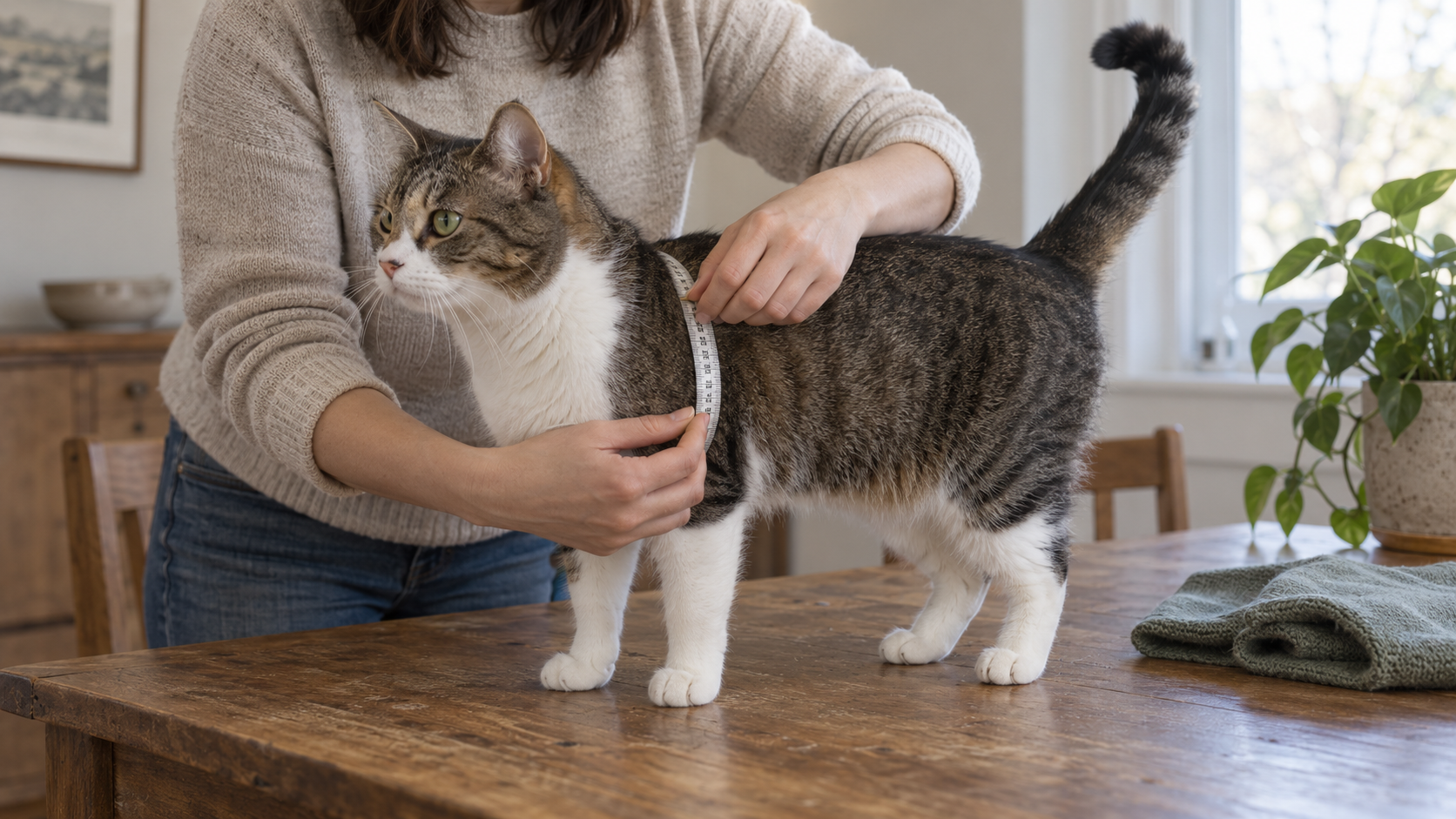
To measure a cat or dog for clothes, take three numbers while your pet is standing naturally: the neck circumference, the widest part of the chest and the back length from the base of the neck to the base of the tail. Write the measurements down, then use the size chart on the specific product page rather than relying on a usual size label.
A few calm minutes now can prevent a garment from pinching at the chest, shifting as your pet walks or extending too far over the tail. The goal is not to make your pet fit a size—it is to find a style and size that allow comfortable, unrestricted movement.
Before you measure
Use a flexible sewing tape, a note on your phone and a few treats if your pet enjoys them. If you do not have a soft tape, wrap a non-stretch string around the body, mark where it meets and lay it against a ruler. Avoid stretchy cord because it can make the result too small.
Measure while your pet is standing on all four feet with their head in a neutral position. A second person can offer calm attention while you read the tape. If your pet pulls away or becomes uneasy, pause and try later rather than restraining them for a clothing measurement.
- Measure over the coat your pet normally has, not over another garment.
- Keep the tape flat and comfortably close to the body without pulling it tight.
- Take each measurement twice and use the larger result if the numbers differ.
- Record inches or centimeters clearly so you compare the same unit on the size chart.
1. Measure the neck
Wrap the tape around the base of the neck, where the neckline of a sweater or coat will sit. This point is usually lower than the position of a narrow everyday collar. Keep the tape level and make sure it is not caught in long fur.
A neckline should not press on the throat or slip over the head unexpectedly. Treat the product chart as the final guide because pull-on necks, collars and adjustable openings can fit differently even when their size labels match.
2. Measure the chest at its widest point
Pass the tape around the broadest part of the ribcage, usually just behind the front legs. Check from the side and underneath that the tape forms a level loop. For many garments, this is the measurement most likely to affect breathing room and freedom of movement.
Do not substitute weight or breed for chest size. Two pets of the same weight can have different proportions, and thick or fluffy coats can also affect fit.
3. Measure the back length
Place the start of the tape at the base of the neck, approximately where the shoulder blades meet, and run it along the spine to the base of the tail. Do not begin at the top of the head, and do not include the tail.
Back length helps you judge coverage. A raincoat may be chosen for more protection, while a vest may intentionally finish sooner. Read the product photos and chart together so you understand the intended silhouette.
How to read a pet clothing size chart
Size labels are not standardized across pet clothing. A medium in one style may have different measurements from a medium in another, so return to the chart on every product page. Compare your pet's actual numbers with the listed neck, chest and back dimensions, noting whether the chart describes body measurements or garment measurements.
For example, imagine a dog measures 14 inches at the neck, 21 inches at the chest and 16 inches along the back. If one size covers a 19–21 inch chest and the next covers 21–23 inches, do not choose from the chest number alone. Check the neck and back ranges, the closure or adjustability and any product-specific sizing note. If the chart says to size up between sizes, follow that instruction.
For a cat measuring 9 inches at the neck, 14 inches at the chest and 11 inches along the back, a style with the correct back length may still be unsuitable if its chest maximum is below 14 inches. Choose the size that accommodates all required measurements rather than the size with the closest back length.
A final fit check before your pet wears it out
Try the garment indoors first. Check the neck and leg openings, then watch your pet walk, turn, sit and lie down. The fabric should not pull across the chest, bunch tightly behind the front legs or interfere with toileting. Remove it if your pet freezes, struggles, pants unexpectedly, scratches at it repeatedly or otherwise appears distressed.
- You can comfortably slide fingers beneath the neckline and chest without a large gap.
- The front legs move through a normal stride without rubbing at the armpits.
- The back hem does not press against the tail or cover toileting areas.
- Fasteners sit flat and cannot catch fur or skin.
Frequently asked questions
- What if my pet is between two clothing sizes?
- Follow the instruction on that product's size chart. When no between-size guidance is provided, check which option safely accommodates the chest and neck, then consider the garment's adjustability and intended coverage. Do not choose a smaller size simply to get a closer-looking fit.
- Can I choose pet clothes by breed or weight?
- Breed and weight can be useful background information, but they do not replace measurements. Pets within the same breed or weight range can have very different neck, chest and back proportions.