
How to Choose a Dog Raincoat
Choose a dog raincoat by comparing coverage, fit, harness access, closures and freedom of movement for your dog's usual walks.
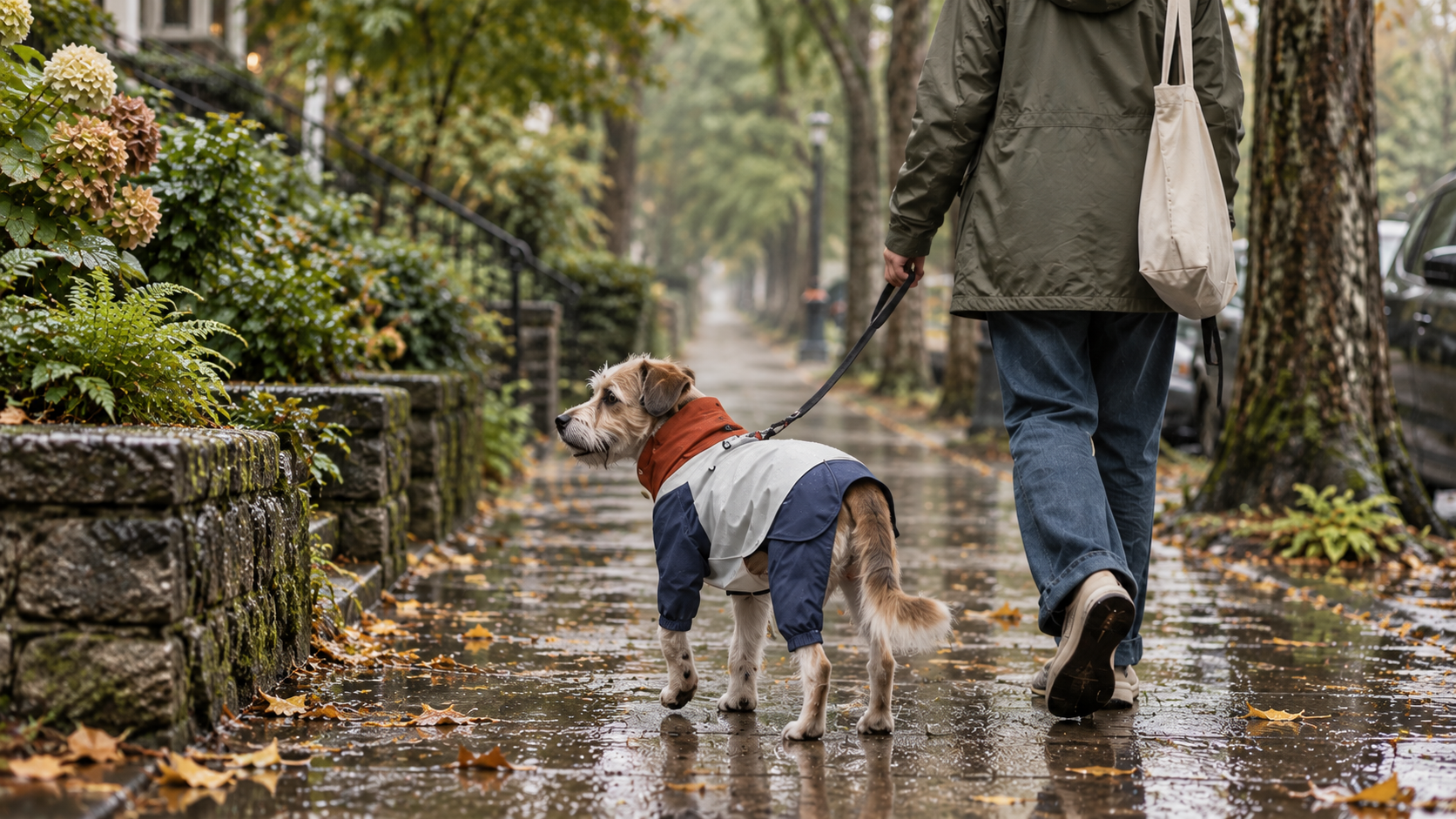
The best dog raincoat is one that suits the weather, covers the areas you want protected and lets your dog walk, sniff and toilet normally. Before choosing a style, measure your dog's neck, chest and back, then compare those numbers with the chart on that exact product page.
More fabric is not automatically better. A simple vest-style coat can be quick to put on, while a four-leg raincoat may reduce the amount of wet fur and mud on longer walks. Your dog's build, gait, harness and comfort with dressing should decide between them.
Choose coverage for your walks
Start with the conditions you actually encounter. For light rain and short neighborhood walks, back and chest coverage may be enough. For wet trails, road spray or dogs with feathering on their legs, a four-leg style can cover more of the body and upper legs. No coat keeps every area dry, and greater coverage should never come at the cost of movement.
Look at the hood or collar design as well. A clear visor can add coverage above the head while preserving forward visibility, but some dogs dislike anything near their ears. A high collar may suit one dog better than a hood. Introduce either indoors before relying on it outside.
Measure fit at the chest, back and leg openings
Measure your dog while standing naturally. The chest loop goes around the widest part of the ribcage, just behind the front legs; back length runs from the base of the neck to the base of the tail. Measure the neck where the raincoat neckline will sit, then check all three numbers against the product chart.
After fastening the coat, watch your dog walk and turn. The front and rear leg openings should not pull, twist or rub. The back should lie smoothly without pushing over the tail, and the underside must leave toileting areas clear. For four-leg styles, check each cuff while the dog takes a full stride.
Learn how to measure your dog before choosing a raincoat size
Match harness access to your walking setup
Decide whether your dog's harness will sit under or over the raincoat. If it sits underneath, find the harness opening or back zipper described on the product page and check that it aligns with your own harness attachment point. An opening in the wrong place can pull the coat backward or make clipping the leash awkward.
Some raincoats include an adjustable harness structure. If you choose one, use only the attachment points and instructions stated for that product. Do not assume a decorative loop or ordinary fabric opening is designed to bear leash pressure.
Review a four-leg raincoat with a back zip and adjustable harness
Compare closures and adjustability
Zippers can create a close, streamlined fit, but should have a guard that helps keep fur and skin away from the teeth. Snaps and hook-and-loop closures can be quicker for some dogs, while buckles and adjustment points can accommodate more variation in body shape. Whatever the closure, it should lie flat and remain secure during normal movement.
Practice fastening the coat indoors. If your dog is worried by the sound of a closure or by having legs guided through openings, slow down or choose a simpler style. A raincoat is only useful if putting it on does not turn every walk into a struggle.
Use this raincoat checklist
Once you have narrowed the options, make the final choice from product-specific details rather than the style name alone.
- The size chart accommodates your dog's neck, chest and back measurements.
- Coverage matches your typical rain, route and cleanup needs.
- Leg openings and cuffs allow a full, natural stride.
- The leash can connect to the harness without pulling or bunching the coat.
- Closures are secure, adjustable where needed and protected from fur and skin.
- The underside leaves enough room for comfortable toileting.
- Your dog remains willing to walk and behaves normally while wearing it.
Compare dog raincoats and outerwear in the Outdoor collection
Check comfort before the first rainy walk
Let your dog wear the raincoat briefly indoors, then check the fit while walking on leash in a dry, familiar place. Remove it if your dog freezes, repeatedly scratches at it, changes gait or appears distressed. After a wet walk, take the coat off, dry your dog and follow the garment's care instructions before storing it.
Frequently asked questions
- Should a dog raincoat cover all four legs?
- Not necessarily. Four-leg coverage can help with mud and wet fur, while body-only styles may be easier for dogs that dislike leg openings. Choose the least restrictive coverage that suits your walks and your dog's comfort.
- Can a dog wear a harness under a raincoat?
- Yes, when the coat is designed with suitably positioned harness access and the layers do not create pressure or restrict movement. Confirm the product details and test the alignment with your own harness before a full walk.