
Can a Dog Wear a Sweater Under a Raincoat? A Layering Guide
Thinking of putting a dog sweater under a raincoat? Check warmth, chest room, sleeve bulk and harness access before trying the two layers together.
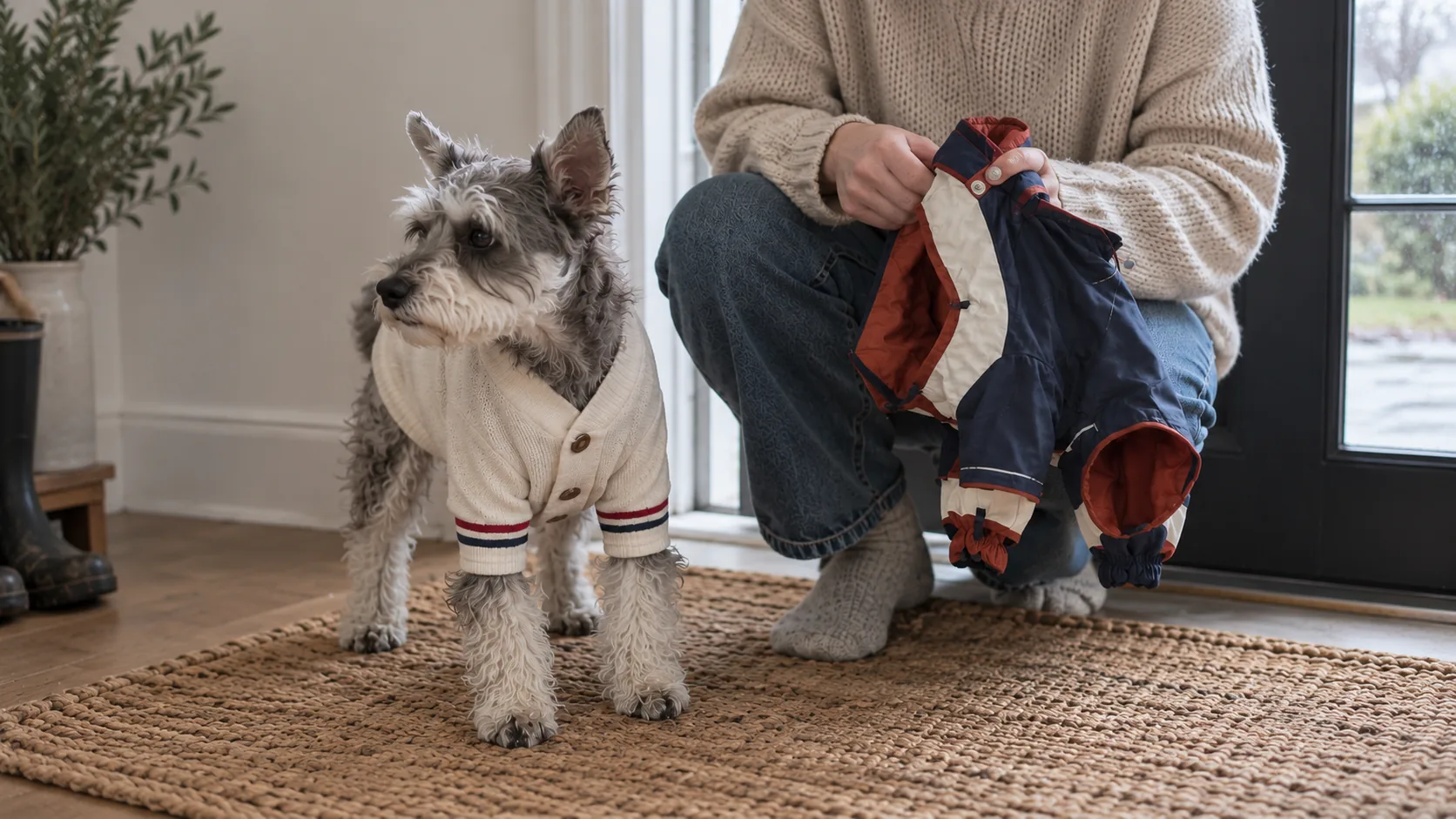
Yes, a dog can wear a sweater under a raincoat when the extra warmth is useful and the two garments fit comfortably together. But a combination that looks tidy on a hanger can feel very different once the dog starts walking.
Check what the raincoat already provides. A light shell and a lined, padded coat are not the same starting point. If the outer garment already has insulation, another sweater may add bulk and warmth your dog does not need.
Give each layer a reason to be there
In a layering system, the inner garment supplies insulation while the outer garment provides weather protection. Hurtta’s layering guide describes this separation and stresses freedom of movement when pieces are combined.
That is a useful approach to choosing clothes, not evidence that any sweater and raincoat will work as a pair. Check both product descriptions. A knitwear item is not automatically designed as a base layer, and a raincoat is not automatically roomy enough for one.
Consider your dog, the weather and the activity. Do not add a second layer simply because you are wearing one. Our guide to whether a dog needs a coat is a useful starting point before choosing extra clothing.
Source: Hurtta’s layering guide
Fit the combination, not just the individual pieces
For example, a cardigan with thick cuffs may sit comfortably on its own but bunch inside a raincoat sleeve. A sleeveless inner layer avoids that particular overlap, but it still needs enough room beneath the outer chest panel. Assess the pieces you have, rather than assuming any two garments of the same labelled size will fit together.
First check each garment on its own. Then, if your dog is comfortable, try them together indoors for a short, supervised fitting.
Look across the chest and behind the front legs. The sweater should not bunch beneath a fastening or push a sleeve into the armpit. Watch for two cuffs stacking around a leg. Turned or folded fabric can be easy to miss when you are looking only at the back.
Let your dog walk, turn and sit. Stop if their movement changes or the outer coat pulls against the inner layer. An outfit that closes is not necessarily an outfit that fits.
Do not solve tightness by automatically buying a larger raincoat. The larger size must still stay in place without loose openings or a dragging underside. If the combination cannot fit properly, use a different pairing or one suitable garment.
Include the harness in the check
Try the exact walking setup you intend to use. Check the harness manufacturer’s fitting instructions and any directions supplied with the coat. Make sure the lead reaches the intended attachment without pulling through the knitwear or straining an opening.
Do not use a decorative loop or an unspecified clothing attachment as a substitute for appropriate walking equipment. If you are uncertain about the arrangement, see our harness over or under a coat guide.
Check again during and after the walk
Layers add warmth; keep watching your dog rather than relying on the forecast alone. Remove unnecessary clothing if your dog appears too warm or uncomfortable. Do not use extra layers to extend a walk in conditions your dog is not coping with.
Afterwards, check beneath the coat as well as its outer surface. Remove damp garments and let them dry according to their care labels. A wet outer shell does not tell you whether the sweater beneath is dry.
If you are comparing options, browse dog knitwear alongside dog outerwear. Compare their charts and construction separately before treating them as a set.
Frequently asked questions
- Does a dog always need a sweater under a raincoat?
- No. A raincoat may be enough, and some dogs do not need additional clothing. Extra insulation should have a clear purpose.
- Can a thick sweater work beneath a close-fitting raincoat?
- Not if the combination restricts movement or puts pressure on the chest and legs. Thickness and fit must be assessed together.
- Can a sweater replace a raincoat?
- Do not assume knitwear provides rain protection. Check the product information rather than relying on appearance.