
Dog Coat or Four-Leg Snowsuit: Which Coverage Does Your Dog Need?
Compare a dog coat with a four-leg snowsuit by coverage, movement, bathroom access and care, rather than choosing by warmth claims alone.
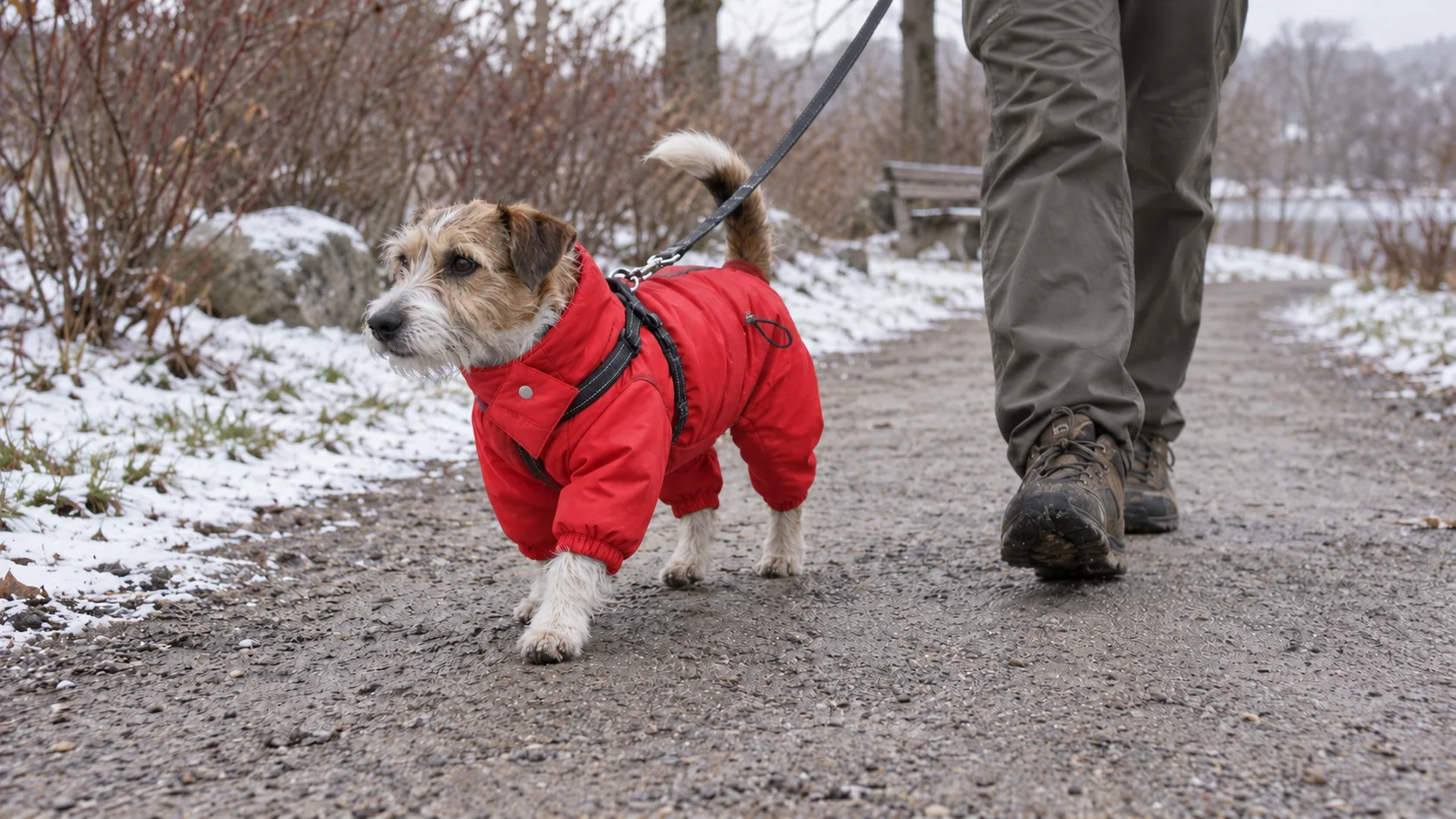
A short trip around the block and a walk through slushy grass leave different parts of a dog wet and muddy. That is a useful place to start when comparing a dog coat with a four-leg snowsuit.
A coat usually leaves more of the legs uncovered. A four-leg garment extends coverage, but also puts fabric around more moving joints. Neither is automatically the better choice. First decide whether your dog needs clothing, then consider which areas need protection.
Look at the coverage you actually need
Ruffwear's coverall guide explains the main difference well: extending fabric over the legs and underbelly can reduce how much dirt reaches those areas. A jacket offers less coverage, which may be enough for the conditions and easier for a dog who dislikes sleeves.
Think about your usual route. Is it a cleared pavement, a muddy verge or deep wet grass? If only the dog's back needs protection, you may not need four sleeves. If the belly and leg fur collect most of the mess, more coverage is worth considering.
Separate warmth from weather protection
Four legs describe the shape of a garment. They do not establish that it is waterproof, insulated or suitable for a particular temperature. Read those details separately. A shell and a padded suit can cover similar areas while doing different jobs.
Hurtta's layering guide distinguishes warming layers from outer protection and stresses freedom of movement. Avoid adding layers simply because they fit in the wardrobe. Check how the complete outfit fits and whether your dog needs that extra clothing.
Source: Hurtta: layers and movement
Try the ordinary movements
Before removing tags or taking a new outfit outdoors, follow the seller's try-on and return instructions. In a safe indoor space, watch your dog walk, turn and sit. Check whether a cuff slides onto a paw or a sleeve pulls when a leg moves forward.
Look underneath as well as from the side. The garment should allow your dog to toilet without fabric being in the way. A neat-looking back view does not settle that question. If the cut does not suit your dog's proportions, a different style may work better than another size.
Ask what daily use will involve
Picture the first wet morning with the new garment. Can you get it on without a struggle? Can you reach the harness attachment? Where will it dry after the walk? Those details matter when you are using an item several times a week.
Compare the amount of clothing with the amount of coverage you need. A four-leg outfit adds cuffs and openings to check. A simpler coat leaves more fur exposed. There is a trade-off, and it is fine to choose the option that is easier for your dog to wear.
Choose for your dog and your route
Our guide to whether a dog needs a coat is the starting point if you are still deciding whether to dress your dog at all. For sizing, take current measurements using the chest, back and neck guide.
When browsing CatMellow outerwear, compare the individual descriptions and charts. Check the stated material, coverage and closures. Do not infer waterproofing or a temperature rating from the word “winter” or from a snowy photograph.
Frequently asked questions
- Is a four-leg suit always warmer than a coat?
- No. Coverage is only one part of the comparison. Materials, insulation, fit and conditions matter, and the product should state what it is designed to do.
- What if my dog will not walk in sleeves?
- Take the garment off rather than trying to force a walk. Check the fit and consider a less restrictive style if clothing is needed. Persistent discomfort deserves advice from your veterinarian.