
Dog Coat Rubbing Under the Front Legs? Check the Cut
A dog coat rubbing behind the front legs may have the wrong cut, a shifting seam or a layer conflict. Check the garment before simply sizing up.
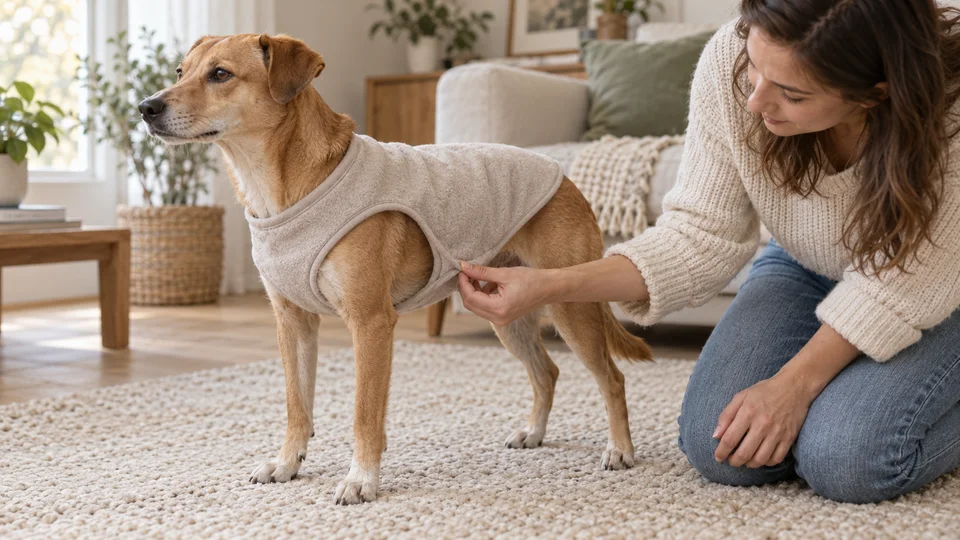
If a dog coat is rubbing under the front legs, take it off before the next walk. Look at the opening, nearby seams and any harness sitting over or beneath it. A larger size may help with tightness, but it will not necessarily fix an opening that sits in the wrong place.
The coat can look right across the back and still catch behind a front leg. That is why a side view and a few ordinary steps are more useful than another photograph of your dog standing perfectly still.
Check the dog before checking the label
If the skin looks irritated or your dog seems sore, stop using the garment and ask a veterinarian for advice. Do not keep trying different strap settings against an uncomfortable area. This guide is about checking clothing construction, not diagnosing or treating a skin problem.
Set the coat aside and note what you observed: which side, where the edge sat and whether a harness was also being worn. A simple note can make a conversation with the retailer much clearer than saying the size was wrong. A picture of the empty garment and its seams may be enough to explain the fit concern without another try-on.
Lay the garment flat and turn the opening outward
Follow the edge that passes behind the front leg. Look for a folded seam, a label sticking into the opening, a closure that has rolled inward or a rough patch of dried dirt. Compare the two sides. An opening that has twisted during dressing may look different once the garment is laid flat.
Check the care label before cleaning it. If the edge remains rough, damaged or misshapen, contact the seller before altering it. Cutting a larger hole changes the construction and may leave an unfinished edge; it also makes the original fit harder to assess.
Compare the pattern, not just the size letter
Canada Pooch’s coat-fitting guide covers chest, neck and back measurements, alongside free movement. Those measurements are a useful starting point. They cannot show exactly where every seam will land on an individual dog, so compare the garment’s shape as well.
Imagine two vests with the same chest measurement: one has a deep, open curve behind each front leg; the other has a small sleeve placed farther back. The chart may suggest the same size while the available leg space is different. That is a reason to ask for a different cut, not to keep moving up the size list.
Source: Canada Pooch: How Should a Dog Coat or Jacket Fit?
| What you notice | What to ask or check |
|---|---|
| The chest looks stretched | Does the chart allow the current chest measurement? |
| Only the rear edge of the opening catches | Would a different opening shape give more clearance? |
| The coat shifts after a few steps | Are the closures positioned as the maker intended? |
| The issue appears with a harness | Where do straps, seams and fabric overlap? |
Record chest, neck and back measurements before comparing sizes
Check layers as a separate question
Lay the harness beside the coat and identify where its straps would cross the garment. A fold trapped beneath a strap is different from an opening that is too small. If the coat has a leash-access opening, check its position against your own harness rather than assuming that all back attachments line up.
Do not loosen a harness beyond its intended fit to make room for a coat. Follow the instructions for both items. If the combination cannot fit correctly, change the combination. Avoid adding an extra shirt simply to cover the area that rubs; another layer makes the fit question more complicated.
Make the next try-on brief and useful
Only try again if your dog is comfortable and there is no unresolved skin concern. Use a quiet indoor space and let the dog walk, turn and sit naturally. Watch the front-leg openings from the side. End the check if the fabric catches or your dog moves differently; repeated test walks will not improve a poor cut.
Before choosing a replacement, send support the product name, size, measurements with units and a description of the exact point of contact. Ask whether another size changes the opening enough, or whether another style is more suitable. Keep the tags and check the current return terms before making alterations.
Frequently asked questions
- Will buying a larger dog coat stop rubbing?
- Not always. A larger coat may solve overall tightness but introduce slipping, while an awkwardly placed opening may still catch. Compare the cut and all required measurements.
- Can a sleeveless dog vest still rub?
- Yes. The edge of its front-leg opening or a nearby seam can still make contact. Sleeveless describes the design, not a guarantee of fit.
- Should I trim the armholes myself?
- Contact the maker first. Cutting changes the garment and can leave rough edges. A suitable replacement is preferable to an improvised change that has not been checked.