
Choosing a Dog Hiking Leash: Standard Leash or Long Line?
Choose a dog hiking leash around trail rules, passing space, and the line you can manage. Compare a standard leash with a long line before buying new gear.
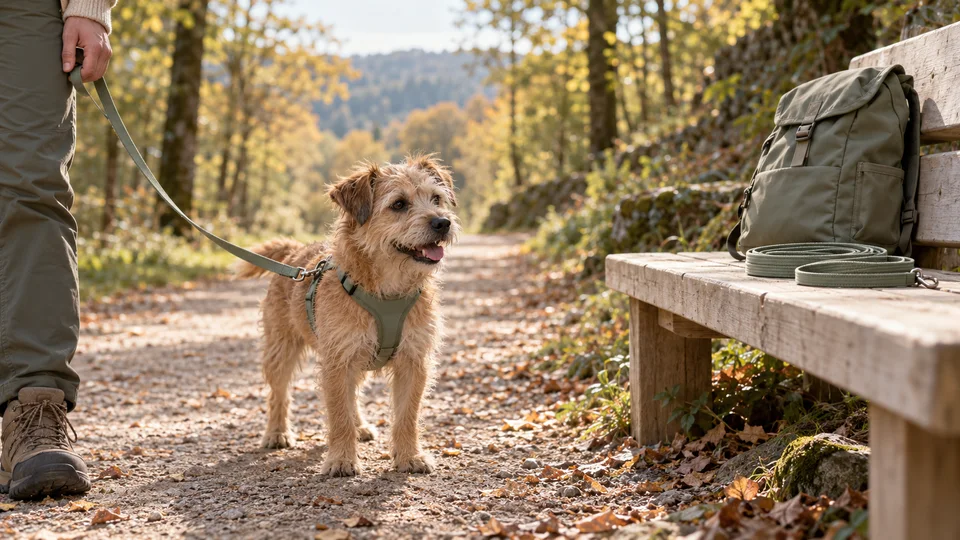
Choose a dog hiking leash by checking the route's rules and the space you can manage. A standard fixed-length leash is a practical starting point for narrow or shared paths. A long line may suit some open, permitted settings, but extra length also means more line to keep clear of people, obstacles, and your own feet.
Start with the most awkward part of the route: the trailhead, a narrow gate, or a place where bikes pass. The right setup needs to work there as well as on the quiet stretch in the photograph. There is no universal hiking leash length that overrides local rules or your dog's needs.
Read the rule before comparing the length
Check pet access and leash requirements for the actual route. A listing that says dogs are allowed may not explain the permitted leash length, seasonal restrictions, or nearby areas that exclude pets. Read the land manager's current page and entrance notices.
NPS pet rules provide concrete examples. Yosemite requires a leash no more than six feet long where pets are permitted. That is a destination-specific rule, not permission to apply the same length everywhere. A product described as a hiking line does not decide where you may use it.
Write down the rule before shopping, then compare the equipment's stated length and intended use. If you are uncertain whether an adjustable design or long line meets the destination's requirements, ask the operator. Take equipment you know complies instead of relying on an interpretation at the trailhead.
Source: National Park Service: Yosemite B.A.R.K. Ranger rules
What changes when you add more line?
A standard leash has a familiar amount of material between your hand and the dog's attachment point. A long line adds reach and a larger amount of loose line to organize. These are descriptions of the setup, not promises about control or behavior.
Ruffwear's leash-selection guide considers activity, length, handling, and hardware. Use that approach to compare the whole arrangement rather than choosing the longest option available. An appealing handle matters less if you cannot comfortably manage the rest of the line.
Walk through the table using a route you know. If most of the outing involves passing others or moving around obstacles, a longer line may spend much of its time gathered up. That is a reason to reconsider whether carrying the extra material helps this particular day.
Source: Ruffwear: Choosing the Best Dog Leash
| Situation | What to consider |
|---|---|
| Car park, gate, or narrow shared path | A manageable short setup that keeps the route clear. |
| Open area where longer lines are allowed | Enough clear space and handling skill to manage the extra line. |
| Frequent passing or hidden bends | How you will keep the dog and leash out of other users’ path. |
| A route with a stated leash-length limit | Equipment that meets that destination’s actual requirement. |
Rehearse the ordinary interruptions
Before taking a new setup onto a trail, try it somewhere familiar and permitted. Practice stopping, turning around, and moving the dog to your side. Then add the ordinary jobs that interrupt a walk: reaching for a waste bag, offering water, and closing a gate.
Notice where the unused line goes. If it falls around your shoes every time you reach for a bottle, simplify the arrangement before adding uneven ground. Follow the equipment's handling instructions and avoid wrapping loose line around your fingers or body to keep it out of the way.
If a longer line is new to both of you, get practical guidance from a qualified reward-based trainer before using it around distractions. There is no need to learn new handling in the middle of a busy trail. You can keep using the familiar permitted leash while practicing elsewhere.
Plan how you will pass other trail users
REI's dog-hiking advice emphasizes maintaining control and making room for other hikers, bikes, and horses to pass. Look ahead for a suitable place to pause before an encounter becomes crowded. Follow the route's right-of-way guidance and keep out of closed or sensitive areas.
A leash stretched across the path occupies space even when the dog is standing still. Bring your setup together before another person reaches you, and leave enough room for them to pass without stepping over it. Do not assume a pause means their dog wants a greeting.
The NPS B.A.R.K. principles also include respecting wildlife and knowing where pets can go. A long line does not extend the allowed route into nearby vegetation or toward an animal. The connection remains your responsibility along its entire length.
Source: REI Expert Advice: Hiking or Backpacking with Your Dog
Check the attachment with every layer in place
Connect the leash only to the collar or harness attachment intended for that use, following the equipment maker's directions. An opening in a coat gives access to a ring underneath; it does not establish that the coat itself can take leash load.
Try the complete arrangement before leaving. Can you see that the clip is closed? Can you reach it without pulling fabric across it? Does the coat stay in position when your dog turns and sits? Check again whenever you add or remove a layer.
Do not make a leash change to compensate for clothing that catches or shifts. Solve the garment fit first, then assess the walking setup. A familiar coat-and-harness combination removes one thing to troubleshoot when the path becomes busier.
Buy for a problem you can name
Before replacing your current leash, finish the sentence: I need a different setup because this one makes it hard to ____. A clear answer might concern managing spare line, reaching a clip, or carrying the equipment after the walk. A color preference is fine too, but it is a different buying decision.
Check the maker's intended use, size guidance, inspection advice, and care instructions. Look over the leash and attachment hardware before setting out; retire or replace damaged equipment according to that guidance. A feature list cannot substitute for checking what is in your hand.
After a familiar outing, note which part worked and which needed attention. If you spent the walk repeatedly repositioning clothing, deal with that separately. If the leash was easy to manage and suited the rules, you may already have the right one for the next hike.
Frequently asked questions
- Is a long line better than a standard leash for hiking?
- It depends on the route, rules, dog, and handler. A standard leash is often simpler on narrow or busy shared paths. A long line needs permitted space and practiced handling. Extra length is not automatically an improvement.
- What is the best leash length for hiking with a dog?
- Start with the destination’s rules, then choose a setup you can manage through the tightest parts of the route. There is no single best length for all trails. Check the equipment’s stated length and intended use rather than relying on its hiking label.
- Can I clip a hiking leash directly to my dog’s coat?
- Use an attachment point specifically designed and approved for that purpose by its maker. An ordinary coat opening usually provides access to a collar or harness underneath. Confirm the complete arrangement before the trip.