
Your First Hike With a Dog: A Checklist for an Easier Start
Plan your first hike with a dog: choose an allowed trail, pack the essentials, check clothing and harness fit, and leave room to turn back early.
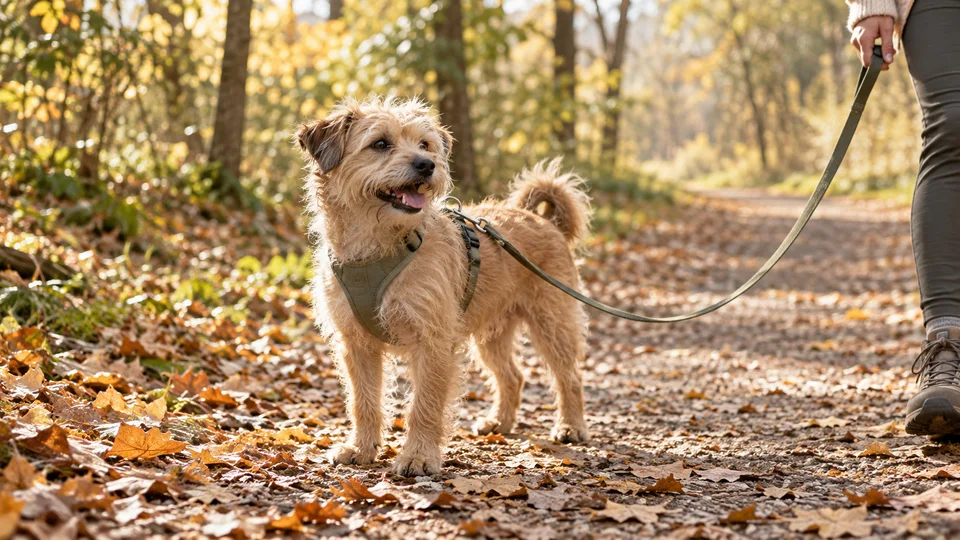
For a first hike with a dog, choose a short, dog-permitted route with straightforward footing and an easy way back. Take drinking water, a bowl, waste bags, a familiar leash setup, and your own hiking essentials. Give yourself time to stop rather than planning around a distance you must finish.
A trail adds things a neighborhood walk may not: uneven ground, narrow passing places, and longer gaps between convenient exits. Your first outing is a chance to learn how your dog handles those changes. The view can wait for another weekend.
Check the actual trail, not just the park name
A dog-friendly label on a travel page is a starting point. Open the land manager's current visitor information and find the named trail. Check pet access, leash rules, closures, parking, and the route back. Save the relevant information before leaving home.
The National Park Service's B.A.R.K. guidance brings four responsibilities together: collect pet waste, use a leash, respect wildlife, and know which areas permit pets. Apply those principles to your route planning, then follow the destination's own rules.
Read the map as a sequence of decisions. Where would you turn around if the path becomes busier than expected? Can you return the way you came, or does a loop commit you to a longer section? For a first outing, a clear return option is useful.
Choose a route that leaves you something in reserve
Write a simple brief before searching: easy footing, manageable travel time, and space to pass other people. That makes it easier to reject a spectacular route with awkward access. Choose conditions you can manage with the equipment and experience you already have.
REI's dog-hiking guide recommends building up trail activity gradually and discussing readiness with a veterinarian, especially for young dogs or dogs with health concerns. There is no single beginner mileage that fits every dog. Ask about the individual dog's needs rather than treating a trail app's difficulty label as medical guidance.
Make the turnaround decision before setting off. For example, agree that the first junction is a place to reassess, not a promise to continue. This is an organizing suggestion, not a recommended exercise dose. Your dog's condition and the route determine whether you go farther.
Source: REI Expert Advice: Hiking or Backpacking with Your Dog
| Before choosing | Look for |
|---|---|
| Pet access | Official confirmation for the specific trail, not just the general area. |
| Footing and exposure | A route suited to your current experience without adding difficult terrain. |
| Return options | An obvious way to shorten the outing. |
| Other users | A realistic plan for passing people, dogs, bikes, or horses. |
Pack things you can reach without emptying the bag
REI identifies fresh water, a way to offer it, waste management, suitable equipment, and first-aid preparation as parts of hiking with a dog. Pack your own navigation and hiking kit too. A dog checklist supplements the human one.
Give small items fixed places. Put unused waste bags where you can reach them one-handed, keep the bowl with the water, and reserve a separate spot for used bags until they can be disposed of properly. A kit that is easy to use is more useful than one photographed neatly before departure.
Before closing the bag, rehearse one water stop. Can you hold the leash, open the bottle, and offer the bowl without setting everything on the path? Change the packing order now if the answer is no. Leave an absorbent towel where you can find it at the end.
Try the complete clothing and harness setup at home
If your dog needs a weather layer, fit it with the harness you actually intend to use. Walk across the room, turn, and sit. Check that the leash attachment is accessible, closures stay in place, and the coat does not bunch behind the front legs.
An ordinary clothing opening is not a load-bearing leash attachment. Use the harness or collar as its maker directs. If the combination needs constant repositioning on a familiar walk, solve that problem before adding a new trail.
Choose clothing for the conditions and the individual dog, rather than dressing for the photograph. Keep a place in your bag for a layer you remove. If you are considering a new style, compare its measurements and construction before taking it outdoors.
Use the first junction as a check-in
Pause somewhere that leaves the route clear. Look at the next section, offer a break, and decide whether continuing still fits the day. A dog who was eager in the trailhead may find a crowded path much harder to settle into.
Keep encounters simple. Leave room for others to pass and do not assume another dog wants a greeting. If you need to stop and adjust a strap, choose a suitable wider place instead of trying to fix it while walking through traffic.
Turning back is a useful decision when the route or conditions no longer suit the outing. Avoid adding a detour because a viewpoint looks close on the map. The return journey is still part of the hike.
Keep a short note after you get home
Write down the route, conditions, and the part that needed the most attention. Perhaps the walk itself was straightforward but passing cyclists was difficult. Perhaps the bowl was buried at the bottom of the bag. Those details give you a better next step than recording distance alone.
Check the equipment for dirt, trapped hair, or worn areas before putting it away. Follow care instructions for any clothing you used and let it dry fully. Repack only after the kit is ready for another trip.
For the next outing, change one thing you can assess: a quieter route, a better packing arrangement, or a familiar garment that fits properly. You do not need a bigger adventure every time.
Frequently asked questions
- How long should a first hike with a dog be?
- Choose a route shorter and simpler than your ambitious option, with an easy return. There is no universal mileage for every dog. Discuss exercise readiness with your veterinarian when age, fitness, or health makes it uncertain.
- What should I bring on a short dog hike?
- Bring drinking water, a bowl, waste bags and a way to carry used bags out, familiar leash equipment, and your own hiking essentials. Add items needed for the destination, conditions, and your dog’s individual care.
- Does my dog need a hiking coat?
- It depends on the dog and the conditions. A coat is not automatically necessary because the outing is a hike. Check the weather, choose an appropriate garment if needed, and test it with the harness before departure.