
How to Store Dog Clothes: A Simple Drawer for Everyday Use
Organize dog clothes with a simple routine for clean layers, drying items and seasonal pieces. Keep useful outfits easy to find without crowding the drawer.
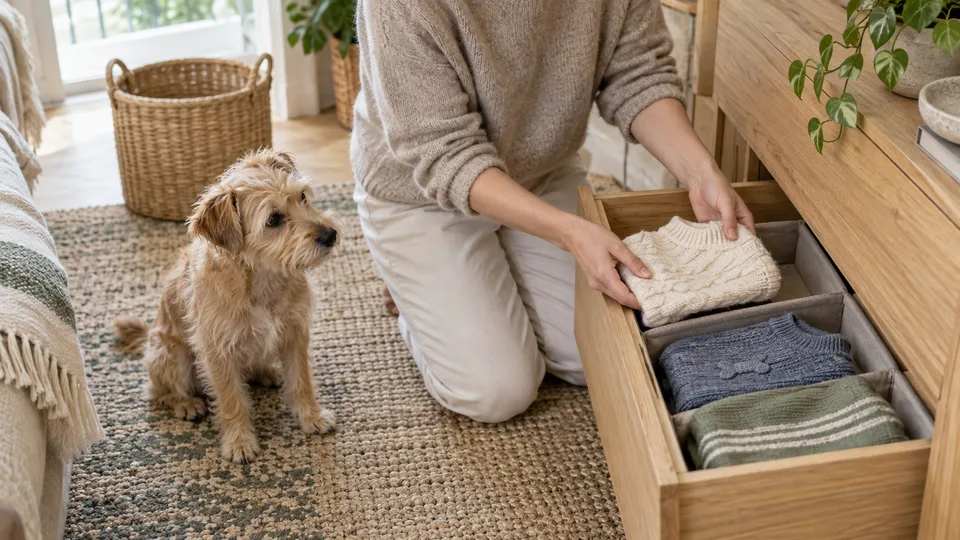
The difficult part of storing dog clothes is rarely finding a bigger box. It is knowing whether the sweater you reach for is clean, dry and still the one that fits. A small, clearly arranged drawer can answer those questions before the leash is on.
Start with the clothes your dog actually uses. Give ready-to-wear garments an easy-to-reach place, and keep anything still drying or waiting for attention outside that group. The aim is a calmer departure, not a larger wardrobe.
Empty one drawer and give each item a job
Lay out the clothes you already own and think about the last few times you used them. A familiar walking layer, a raincoat and an occasional photo outfit do not need equally prominent positions. Put frequently used pieces where you can see them first.
Choose simple groups that make sense in your home: ready for this week, saved for a different season, and needs a decision. That last group is for the garment you keep picking up and putting back because something about it no longer works.
Do not buy dividers until you know what needs a place. A spare drawer or a small existing shelf may be enough. Leave room to lift out one item without pulling the rest into a pile.
Make dry a condition for putting clothes away
A garment can be washed and still not be ready for storage. Follow its care label for drying and check the thicker areas, lining and folded edges before returning it to a closed drawer. Keep items that are still damp in the appropriate drying space.
After a wet outing, resist dropping everything straight into the clean clothing area. Set the used garment aside for the care it needs, then return it only when ready. Ruffwear's apparel-care guidance also emphasizes drying gear completely before storage; its specific wash settings apply to its own products, so your garment's label remains the reference.
Fold so you can recognize the piece
A useful fold lets you identify the garment without opening it fully. Keep a distinctive color or part of the neckline visible. Arrange pieces in a loose row or a shallow stack, whichever makes them easier to retrieve from your particular drawer.
Support a soft sweater while folding instead of stretching it to fit a narrow compartment. Tuck sleeves inward gently and avoid forcing a bulky garment under a drawer that barely closes. Follow any storage instructions supplied with the item.
Keep exposed hook-and-loop fasteners from catching neighboring knits, and place detachable accessories together in their own small compartment. Store loose parts where your dog cannot help themselves to them.
Keep a small fit note for easy mix-ups
If two dogs share the house, organize by dog before organizing by color. Similar-looking garments can have very different measurements. A note on the divider is easier to check than the size letter on several almost identical sweaters.
For a garment you are saving for another season, a phone note can record whose it is and which size chart belongs to it. The note might simply say, 'Milo: blue vest; chest measurement checked in October.' It is a reminder to check again, not a promise that the same size will fit next time.
When a piece returns after months in storage, inspect its condition and repeat a brief fit check before an outing.
Give repairs and returns their own place
A loose seam or missing fastening is easy to forget when the garment disappears under clean clothes. Keep it in a separate bag or small tray with a note describing what needs attention. Do the same for an item you are still deciding whether to return, while respecting the seller's return conditions.
Set a modest decision date instead of building a permanent pile. Repair it if appropriate, ask the seller for guidance, or remove it from the clothing rotation. An outfit that repeatedly fails your dog's fit check should not keep occupying the ready-to-wear spot.
This also helps when planning a trip: the drawer offers an honest picture of what is usable, rather than everything you happen to own.
Reset the drawer when clean laundry comes back
Make the routine small enough to repeat. Before putting away laundry, check what remains at the front, move the next useful piece into view and take out anything awaiting attention. You do not need to rearrange the whole drawer.
If you repeatedly cannot find a particular garment, change where it lives before adding more storage. The best arrangement is the one you can use with one hand while the other holds the leash.
Frequently asked questions
- Can I store dog clothes in a closed box?
- A closed box can keep fully dry, clean garments together if the storage location is suitable and the care label allows it. Keep items that still need drying outside it, and check the contents before bringing seasonal clothing back into use.
- Do I need a separate drawer for each dog?
- No. Clearly divided sections can work just as well. Grouping by dog first is helpful when garments look similar or several brands use different size labels.
- How many outfits should stay near the door?
- Keep the pieces you regularly reach for accessible. Other garments can live elsewhere. There is no target wardrobe size; enough space to find, remove and replace each useful item matters more than the number.