
Dog Coats for Long-Haired Dogs: Look Inside Before Choosing
Choosing a coat for a long-haired dog? Inspect the lining, closures, and fit, then check the fur after walks. More insulation is not always the answer.
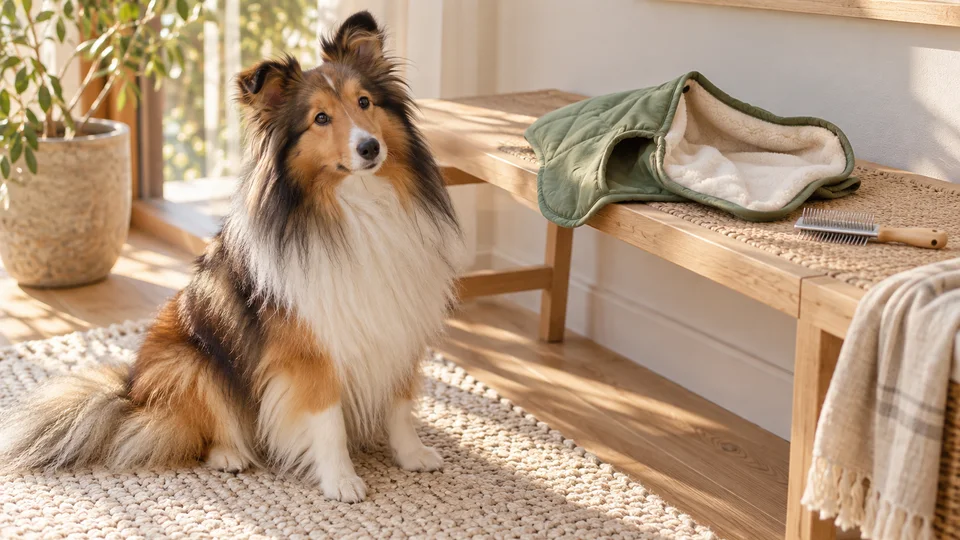
For a long-haired dog, choose an outer layer around the weather and the job it needs to do, then examine the lining and closures. A thick coat of fur does not automatically make every jacket unnecessary, but it is a good reason not to buy extra insulation by default. Check the fur after wearing any new garment.
A jacket's outside tells you about its color and coverage. The inside tells you what will sit against your dog's coat. Turn it over before deciding: the lining, seam edges, and fastening positions deserve as much attention as the shell.
Decide whether you need weather coverage or warmth
Start with a specific walk. Are you dealing with rain along an exposed pavement, snow gathering in the coat, or a brief trip outside? ‘Winter jacket’ is too broad a shopping brief. Write down the problem you want the garment to solve and compare products against that.
Ruffwear's jacket guide distinguishes between dogs with different natural coats and notes that longer fur can collect snow on the underside. This supports considering coverage separately from insulation. It does not mean every long-haired dog should wear a coat in snow or that all dense-coated dogs have identical needs.
Read the individual garment description for its intended use. Do not treat a lined sweater, uninsulated rain shell, and insulated coat as interchangeable because all three cover the back. If a listing does not explain its layers, ask before ordering.
Turn the jacket inside out
Inspect the areas that meet the chest, shoulders, and sides. Run your hand over the seams and around the armholes. Look for exposed fastening surfaces, loose threads, and edges that could catch long hair. A photograph of a smooth outer shell will not show these details.
A smooth lining is a useful feature to inspect, not a promise that the garment prevents tangles. The result still depends on fit, movement, the dog's fur, and how long the coat is worn. Avoid buying on an ‘anti-matting’ claim unless the seller explains what supports it.
Think about dressing and removal as well. Can you see where the hair is while closing the jacket? Is there enough access to move it away gently? The easiest closure for a short-haired dog may feel fiddly around a long ruff or feathered legs.
Measure the dog; do not guess from the fluffy outline
A thick coat of fur can disguise a narrow chest or waist. Follow the seller's measuring instructions and keep the tape against the body without pulling it tight. Do not choose a size solely because a photograph shows the same breed or a similar silhouette.
At the fitting, look for a garment that stays positioned while the dog walks and turns. Check that the chest panel is not dragged behind the front legs and that the closure is not trapping hair. If the size chart is ambiguous, send the measurements to the seller instead of inventing an allowance.
Sizing up just to make room for fluff may leave a coat rotating around the body. Sizing down to control that rotation can restrict movement. If neither size fits, consider a different cut rather than asking the adjustments to compensate for the whole pattern.
Make a quick fur check part of taking the coat off
Remove the garment when the walk is finished and check the areas it covered. Notice any new tangles, compressed patches, dampness, or hair caught at the fasteners. Compare the same places after the next short use. Repeated trouble in one spot is useful information about that garment's fit.
VCA's grooming guide identifies areas such as the armpits and behind the ears as places where long hair can tangle, and recommends regular grooming appropriate to coat type. It advises professional help for extensive matting. Clothing should not replace that routine.
If you find a knot, do not drag the jacket over it again and hope it settles. Pause use while you address the grooming issue with appropriate help. Seek veterinary advice for irritated or painful skin; do not use scissors close to the skin to remove mats.
Source: VCA Animal Hospitals: Grooming and Coat Care for Your Dog
| What you notice | What to do next |
|---|---|
| Hair caught at the same closure | Review the fastening position and how you dress the dog. |
| A new tangle near a seam | Pause use, check the fit, and address the tangle appropriately. |
| Damp fur underneath | Remove the layer, dry the dog as appropriate, and reassess conditions and garment choice. |
| The coat rotates despite adjustment | Compare a different pattern rather than tightening it excessively. |
Choose a coat you can inspect and care for easily
A jacket that opens widely makes the lining easier to inspect. Before putting it away, check for trapped hair and follow the manufacturer's cleaning instructions. Let the garment dry fully before storage; check the inside as well as the outer surface.
If you alternate between wet walks and indoor breaks, keep a dry place for the coat near the door. That small arrangement makes it easier to remove the layer promptly and notice when the lining needs attention. It also keeps a damp jacket from disappearing into a pile of clean clothes.
Use the same approach when browsing CatMellow: look at the individual construction, compare measurements, and ask for missing lining details. A useful coat is one that fits your dog's routine and can be checked easily after use, not simply the thickest option on the page.
Frequently asked questions
- Do long-haired dogs need winter coats?
- Some may benefit from weather coverage, while others do not need added insulation. Consider the individual dog, conditions, and activity. Fur length alone does not answer the question.
- Will a smooth lining stop my dog’s fur from matting?
- There is no guarantee. Inspect the lining, choose an appropriate fit, and check the fur after wearing it. Repeated tangles are a reason to pause use and reassess the garment and grooming routine.
- Should I brush my dog before putting a jacket on?
- Keep the coat on its normal grooming schedule and address existing tangles before covering them. Follow advice appropriate to your dog’s coat type; ask a groomer for help with difficult knots rather than pulling through them.