
Camping With a Dog for the First Time: Plan a Calm First Night
Plan a first camping trip with your dog: check campsite rules, rehearse the sleeping setup, organize night breaks, and keep an easy option to go home.
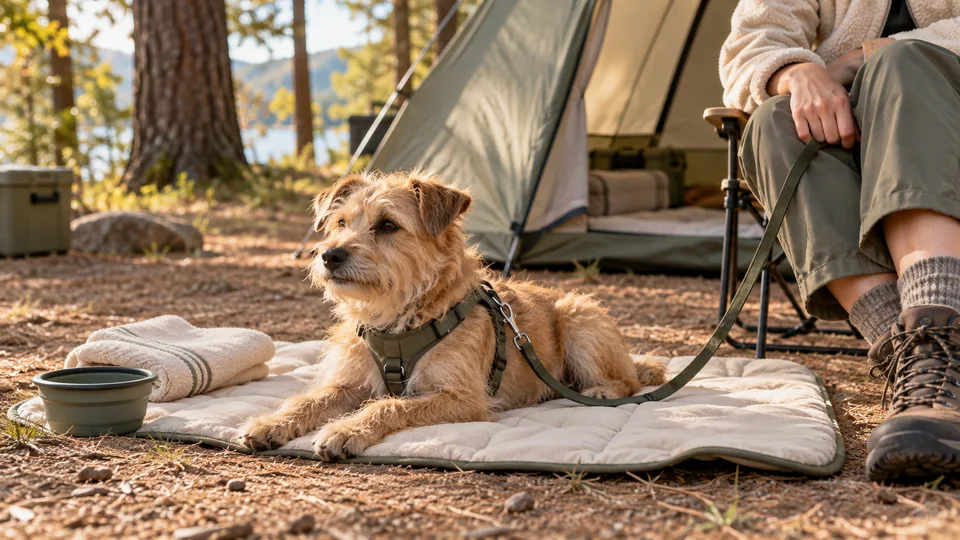
For a first camping trip with a dog, start with a nearby campsite that permits pets, practice the sleeping setup at home, and keep the evening simple. Plan where your dog will rest, who will supervise during campsite chores, and how you will handle a night-time toilet break. Leave yourself an easy way home.
The unfamiliar part often starts after the daytime activity ends. A zipper opens nearby, footsteps pass the tent, and your dog listens instead of sleeping. Planning that ordinary hour before bed can be more useful than adding another accessory to the packing list.
Before booking, check what “pets allowed” includes
A campsite listing may answer whether dogs can stay at the campsite without answering where they can go during the day. Read the current campground rules and the destination's pet page before reserving. Look for the actual areas and facilities you plan to use.
The National Park Service advises checking restrictions that may apply to trails, buildings, and water, as well as the campground. It also says pets need supervision. Plan a day that includes your dog rather than arriving with an activity that requires leaving them behind.
Think through the practical gaps: checking in, collecting water, using shared facilities, and loading the car. If you are traveling alone, ask the campground how those arrangements work with a dog. A clear answer before booking is better than improvising at a busy reception desk.
Source: National Park Service: Camping with Pets
| Ask about | Why it changes your plan |
|---|---|
| The exact campsite and pet rules | Pet access can differ across areas of the same destination. |
| Nearby routes and facilities | Your daytime plan needs to work with your dog present. |
| Supervision during chores | Decide who holds the leash while equipment is being moved. |
| Quiet hours and arrival time | Give yourself time to set up before the evening rush. |
Try the sleeping space before loading the car
Ruffwear's camping guide recommends introducing the tent before the trip. Set up the equipment you intend to take and let your dog explore it without pressure. A new tent does not become familiar simply because it contains a familiar person.
Lay out your own sleep gear and the dog's mat together. Can you reach the door without stepping over the dog? Is there room to move a wet towel away from bedding? Try those ordinary movements in daylight rather than discovering the layout after bedtime.
Begin with a brief, relaxed visit to the setup and build from what your dog accepts. If they cannot rest there at home, make the next step another practice session or a daytime outing. Forcing a longer stay does not tell you how to make the experience easier.
Give the dog a place before unpacking everything
Choose a safe resting spot within your assigned campsite, away from vehicle movement and cooking equipment. Put down the familiar mat and offer water. Keep your dog with a supervising adult while the rest of the equipment comes out of the car.
Work out the division of jobs in advance. With two adults, one can manage the dog while the other handles poles and bags. If you are alone, unpack in stages while maintaining the control required by the campground. Avoid turning setup into a scramble of loose equipment and a wandering dog.
A tent is a sleeping space, not a reliable substitute for restraint and supervision. Follow the site's leash rules and the equipment instructions. Keep the route around the mat clear so you can move without stepping over a leash or disturbing the dog each time.
Make the hour before bed predictable
Keep the first evening's schedule light. A short familiar routine is easier to manage than arriving late, cooking a complicated meal, and trying a new outfit at the same time. Set up the sleeping area before you need it.
REI's campground guidance discusses putting pet food away, and Ruffwear advises clearing food debris. Follow the destination's storage requirements for pet food and other attractants. Check the ground where your dog ate as well as the bowl.
Before going into the tent, arrange a supervised toilet outing, check the mat is dry, and put damp gear somewhere separate from bedding. If clothing is wet or dirty, remove it and reassess what is appropriate. Extra layers should not be used to compensate for a sleeping arrangement that is unsuitable for the conditions.
Put the night-break kit in one place
Keep your light, shoes, leash, and waste bags together where you can reach them. Decide who gets up with the dog and where the permitted toilet area is. Familiarize yourself with that route before darkness makes the campsite look different.
Have your dog under control before opening the tent. Take a simple direct outing and return to the sleeping space without adding a tour of neighboring pitches. Keep your light and movement considerate of other campers.
If the dog needs clothing for the outing, use something already tried on and easy to remove. This is an awkward moment to discover a hidden harness opening or a buckle buried in fur. Prepare the complete setup before bed.
Keep going home as a real option
Choosing a nearby site for the first trip makes an early finish easier to act on. If your dog remains unsettled or the conditions no longer match your setup, shorten the stay. You can learn from a daytime camp visit without completing an overnight stay.
Afterwards, note when your dog rested and what interrupted them. Was the campsite beside a busy path? Did moving bedding help at the practice session but not at camp? Specific observations make it easier to choose the next site and layout.
For the next trip, change one practical thing and see whether it helps. Keep the familiar mat, simplify arrival, or choose a quieter campsite where available. Once the routine works, you can decide whether a longer stay makes sense.
Frequently asked questions
- Can my dog sleep in my tent?
- Check the campground rules and practice with the actual sleeping layout first. Allow space for both of you to rest and move. A closed tent is not a reason to leave the dog unsupervised.
- Can I leave my dog at the campsite while I hike?
- Plan activities that let your dog remain with you or another responsible companion. NPS and REI guidance advise against leaving a pet unattended at camp. If a planned trail excludes dogs, choose another activity or arrange appropriate care elsewhere.
- Does a dog need a coat for camping?
- Consider the individual dog, weather, activity, and sleeping setup. Use clothing that is appropriate, dry, and already familiar. Do not assume one coat makes an unsuitable overnight temperature or sleeping arrangement acceptable.