
Dog Coats for Male Dogs: Check the Belly Opening Before You Buy
Check a male dog’s coat from underneath, not just along the back. Learn what to ask about belly length, bathroom clearance, and fabric that shifts.
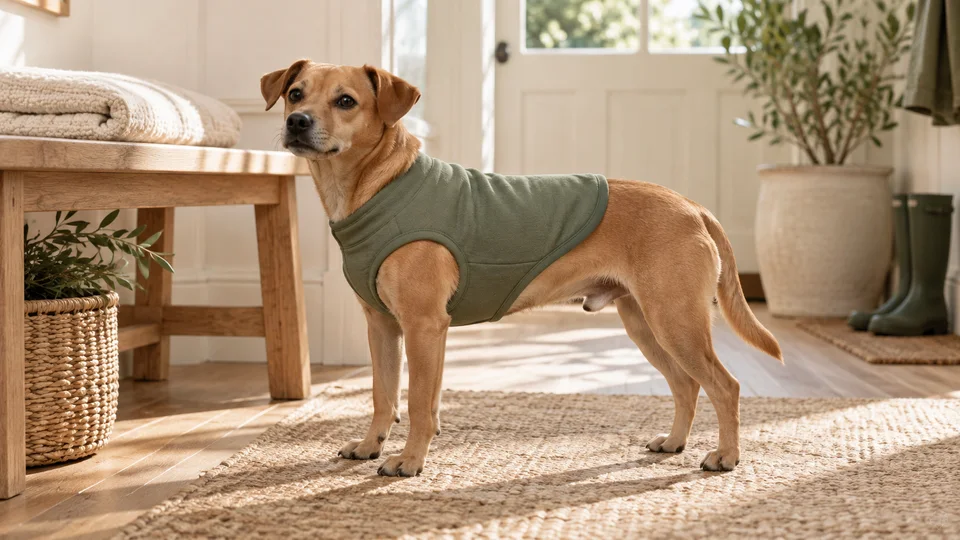
A coat for a male dog needs an underside opening that stays clear when he urinates. Back length alone cannot tell you that. Check where the belly panel ends, whether the garment shifts as he moves, and how the cut works with his individual shape and posture.
This is the detail that is easy to miss in a beautiful side-view photograph. The coat can fit neatly across the shoulders and still have too much fabric underneath. Before ordering another size, find out whether the problem is the size or the pattern.
Back length and belly length answer different questions
Back length describes coverage along the top of the body. Belly length describes how far the fabric extends underneath. A long back panel does not necessarily require a long belly panel, and two coats with the same listed back measurement may have very different underside shapes.
Look for an underside photograph, not simply a second color photo. Identify the rear edge of the belly panel, any elastic, and the position of straps. Ask whether the measurements shown are body measurements or finished garment measurements; they are not interchangeable.
Equafleece provides a useful example of specific product information: its Dog Suit page explains the open area between the rear legs and discusses where its garments end under a male dog. It also notes that another style may suit some individual dimensions or habits. Those are brand-specific details, not a guarantee about other dog clothes.
Ask the seller a question they can actually answer
Instead of asking only whether a coat is suitable for boys, describe the information you need: the underside length in the proposed size, a photo of the belly opening, and how any adjustment changes that opening. Send the dog's measurements and identify which size chart you used.
A useful message might be: ‘My dog's chest is __ and back length is __. In size __, how far does the belly panel extend from the front of the chest? Could you show the underside and explain which adjustments change its position?’ This invites a concrete answer rather than a general reassurance.
Do not assume that an opening shown in one size will sit in exactly the same place on your dog. Compare proportions as well as numbers. A deep chest, narrow waist, or long body can change where the same pattern settles.
Check the opening after movement, not just after dressing
Fit the coat according to its instructions and look from the side while your dog stands naturally. You should be able to see whether the underside fabric reaches an area that must remain uncovered. Do not stretch the coat into a flattering position for the check.
Then watch your dog walk, turn, and sit. Look again. If the garment has slipped backward, sideways, or into a fold, the initial view was incomplete. A coat that needs constant manual repositioning is not a dependable fit for a normal walk.
Use only adjustments intended by the maker. Tightening the chest excessively to pull the belly panel forward trades one fit problem for another. Likewise, a knot in spare fabric can sit against the body or work loose. A different pattern is often the more straightforward choice.
| What you notice | What to do next |
|---|---|
| The rear edge extends too far while the dog stands | Ask about a shorter underside or different cut. |
| The opening looks clear, then shifts after walking | Reassess overall fit and manufacturer-approved adjustments. |
| A larger size solves the chest but adds belly length | Compare another pattern rather than repeatedly sizing up. |
| The chart gives only a back measurement | Request chest, neck, and underside information before ordering. |
What if your dog urinates on the coat?
Take the garment off and follow its care label. Before trying it again, inspect where it became wet and compare that location with the opening. Was the fabric too long, folded inward, or sliding during movement? Keep your observations specific; they will help the seller understand the issue.
Check the returns policy before an outdoor trial, since wearing or washing a garment may affect eligibility. An indoor fitting can reveal many problems without taking the coat outside. If the seller accepts fit photos, a side view and an underside view of the garment laid flat may be more useful than a distant portrait of the dog.
Do not cut a new opening unless the manufacturer explicitly provides instructions for that exact garment. Some constructions can unravel or lose their intended shape when altered. A permitted alteration on one fleece product is not permission to cut a lined raincoat, knit sweater, or another brand's suit.
Choose enough coverage for the job
Write down what you want the coat to do before comparing styles. Covering the back for a damp walk and covering much of the underside against splashes are different priorities. More underside fabric gives you more fit details to check; it is not automatically an upgrade.
For a dog whose proportions do not work with a particular belly panel, a simpler coat may be easier to fit than a full suit. That is a selection decision, not a universal rule about male dogs. The useful question is whether this exact garment stays in the right place on this dog.
When you compare CatMellow styles, keep the product's own chart and photographs open beside your measurements. If bathroom clearance is unclear, ask before ordering. A short question about the underside can be more valuable than choosing a size from the model dog's breed.
Frequently asked questions
- Do male dogs need special coats?
- They need a suitable underside opening, but a separate male-only label is not essential. Judge the actual cut and its position on your dog rather than relying on the category name.
- Will a smaller size stop my dog getting urine on his sweater?
- It might shorten the fabric, but it can also make the chest or neck too tight. Check all measurements. If the body fits but the underside is too long, another cut is the better option to investigate.
- Can I use a recovery suit as an everyday coat?
- Do not assume the designs serve the same purpose. Recovery garments can have different opening arrangements and care instructions. Follow the product instructions and your veterinarian’s directions for postoperative use.