
Muddy Dog Paws After Walks: Build an Easier Doorway Routine
Manage muddy dog paws after walks with a prepared doorway, gentle cleaning, dry towels, and a separate place for wet dog clothing and walking gear.
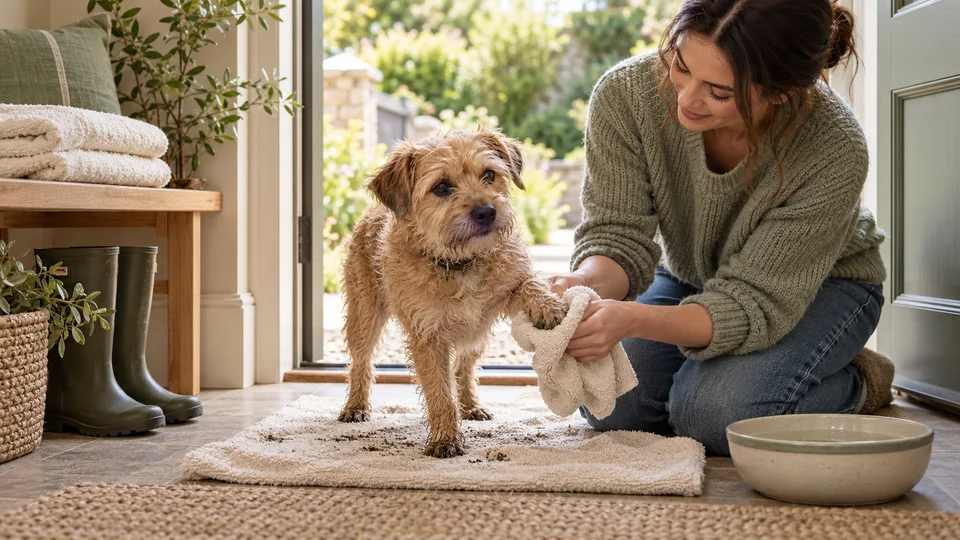
For ordinary muddy dog paws after walks, prepare a stable washable spot by the door, use water and a soft cloth to remove the dirt gently, then dry the paws before moving indoors. Keep a clean towel separate from the muddy one. Stop routine cleanup if you find pain, a wound, or something embedded in the paw.
The awkward part is often the doorway: one hand has the leash, the towel is in another room, and the dog has already crossed the rug. A small change to where things live can make the next wet walk much easier to finish.
Set up the landing spot before the walk
Choose a place where your dog can stand securely and water will not damage the floor. Clear room to move without stepping over shoes or bags. Put the towel within reach before leaving home.
Chewy's muddy-paw guide suggests planning a washing station around water-friendly flooring, access to water, towels, and a nonslip surface. You can apply that idea to a modest doorway setup without installing a dog shower.
Try the arrangement on a dry day. Can you close the door while keeping the dog with you? Can you reach the cloth easily? If the washing space is elsewhere, clear a washable route to it. Leave somewhere for a wet weather layer too, so you can remove it before cleaning the paws.
Match the cleanup to what is actually on the paws
Look before wiping. A little loose dirt calls for a different amount of cleaning from wet clay around the toes. Begin with gentle handling and plain water for ordinary dirt, using a soft damp cloth or a suitable rinse where needed. Avoid scrubbing harder simply because the first cloth becomes muddy.
Use a fresh part of the cloth as you work and replace dirty water. Keep the process small enough that you can see what you are doing. A full bath after every damp walk adds work without first answering the immediate question: which parts are dirty?
This routine concerns ordinary outdoor mud. Road salt or an unknown spill changes the situation. VCA recommends washing or wiping winter salt and deicer residue from paws with warm water. If you suspect a harmful substance, contact your veterinarian for advice specific to that exposure rather than experimenting with a household cleaning product.
Source: VCA Animal Hospitals: Cold Weather Safety for Your Pets
| What you find | A practical next step |
|---|---|
| A little loose dirt | Use gentle, limited cleaning rather than starting a full bath automatically. |
| Mud remaining around the paw | Use clean water and a soft cloth or a suitable rinse, then dry. |
| A wet cuff or muddy underside | Remove the garment for a separate look and follow its care label. |
| Pain, bleeding, or an embedded object | Stop treating this as ordinary dirt and contact a veterinarian. |
Work in a sequence you can keep track of
Start with one paw and keep track of which ones you have finished. Support the dog in a comfortable standing position rather than pulling a leg far from the body. Pause if they become uneasy. The purpose is a manageable routine, not getting through all four feet at any cost.
Keep gentle paw handling separate from the messiest arrival of the week. Practice brief, comfortable touches at another time, using rewards your dog can have. If handling is consistently difficult, ask a qualified reward-based trainer or your veterinary team to help you work out why.
For two dogs, arrange supervision so you can clean one without the other walking back through the wet area. For two people, agree who manages the door and who handles the towel. These are small household choices, but deciding them in advance saves repeated reaching and swapping.
Compare how different coat styles cover the legs and underside
Give drying its own towel
Once the dirt is removed, use a clean dry towel rather than the cloth that collected the mud. Gently pat the paw and dry accessible spaces around the toes without forcing them apart. Check the lower legs and underside as well, especially when long fur has brushed through wet grass.
Put used towels in their washing place and replace a wet mat. Otherwise, the clean dog may step straight back onto the patch you just soaked. Keep enough spare cloths for the number of walks your household usually takes before the next laundry load.
Check that the dog can walk away comfortably. VCA identifies limping and repeated paw licking as possible signs of foot-pad injury and recommends veterinary attention for pad injuries. A painful paw needs a different response from another round of wiping. Do not dig into a pad to investigate an embedded object.
Source: VCA Animal Hospitals: Torn or Injured Foot Pads in Dogs
Take muddy clothing out of the process
Undo a dirty garment where you can contain the mess, then inspect the cuffs, belly panel, and fastenings separately. Follow the garment's washing directions. Do not keep rubbing mud from a paw while the wet cuff beside it puts dirt back on the leg.
Keep clothing laundry separate from the immediate task of cleaning your dog. For example, set the coat in a washable tray, finish drying the dog, and then deal with the garment. That order avoids trying to read a care label while balancing a bowl and holding a leash.
Check whether the clothing has been staying in position on walks. A dragging cuff or loose belly panel can become dirty for reasons that another wash will not solve. Revisit its fit and construction before the next wet outing.
Reset the doorway for the next return
Rinse and clean the tools you used, leave them to dry, and return the clean supplies to their places. Hang garments as their care instructions allow, with space for them to dry fully. A closed bag of wet gear is transport storage, not the final step of putting things away.
If the same part of the routine causes trouble, change that one part. Move the towel nearer the handle, use a smaller water container you can carry comfortably, or remove a loose rug from the route. A useful setup is one you can repeat while wearing a coat and carrying keys.
You may still get the occasional paw print. Aim for a practical transition from outdoors to indoors, with a dog who is comfortable being handled and equipment ready for another day. There is no need to turn every rainy walk into a major cleaning project.
Frequently asked questions
- Should I bathe my dog after every muddy walk?
- Start by checking where the dirt is. For ordinary mud limited to the paws or lower legs, targeted gentle cleaning may be all the cleanup you need. Follow veterinary advice for your dog’s skin needs, and use the garment care label for dirty clothing.
- What should I keep in a dog paw cleaning station?
- Keep a stable washable surface, access to clean water, soft cleaning cloths, dry towels, and a place for dirty items. Arrange everything so you can reach it while supervising the dog and closing the door.
- What if my dog limps or keeps licking a paw after cleanup?
- Stop routine cleaning and contact your veterinarian, especially if there is pain, bleeding, a wound, or an embedded object. Do not assume the problem is leftover mud or try to dig an object out of a paw pad.